Tiger Muay Thai Phuket: The Complete Training Camp Guide
There is one gym in the world where a complete beginner and UFC professional fighters can train side by side, sweat through the same drills, and walk out of the same gate at the end of the day.
Tiger Muay Thai & MMA in Phuket, Thailand is that gym. It has grown from a small Muay Thai camp on Chalong Road into one of the premier training facility for combat sports on the planet. People come from every corner of the world get authentic muay thai training here, some chasing titles, some chasing transformation, and some just chasing the thrill of learning something real. It is an authentic experience in an ideal environment.
If you have been thinking about making the trip, this post is going to give you everything you need to know before you book your flight. What the classes are actually like, how much it costs, where to stay, what to eat, and how to get the absolute most out of your time there.Whether you have never thrown a kick in your life or you have been training for years, this guide is for you.
What Tiger Muay Thai Actually Is and Why It Has a Global Reputation
Most gyms are just gyms. Tiger Muay Thai is something else entirely.
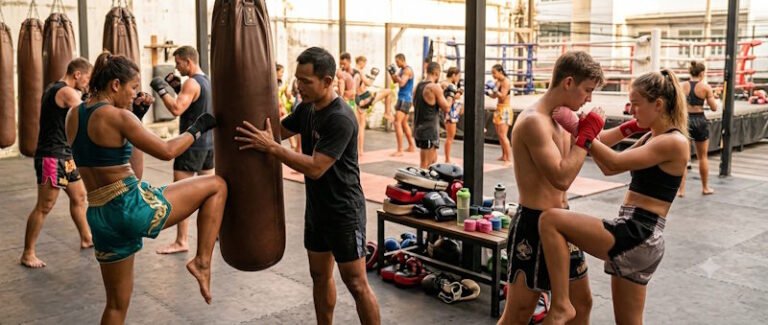
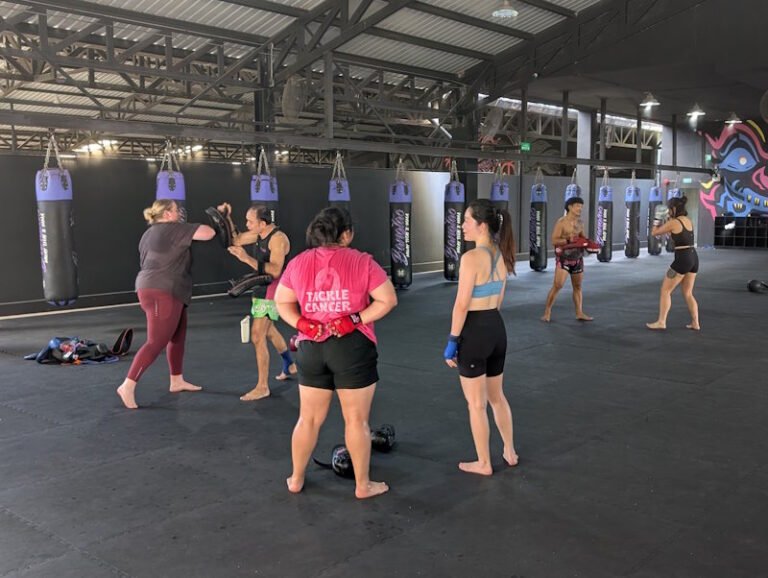
Founded in 2004, Tiger Muay Thai started as a modest training camp aimed at teaching authentic Muay Thai to both locals and visiting fighters. Over the years it evolved into something far bigger, a full-scale training facility that now covers multiple acres in the Chalong area of Phuket and offers classes across Muay Thai, MMA, Brazilian Jiu-Jitsu, wrestling, boxing, fitness conditioning, and more. The facilities include multiple training rings, weight rooms, a pool, accommodation, restaurants, and an on-site clinic. It is an elite training program.
What separates Tiger from most camps is the combination of professional-level training with beginner accessibility. Most serious combat sports gyms are intimidating environments built for fighters. Tiger built an ecosystem that welcomes everyone without watering down the quality of instruction.
World-class coaches: Many trainers at Tiger are former champions with deep roots in Thai boxing tradition. You are learning from people who have lived this sport.
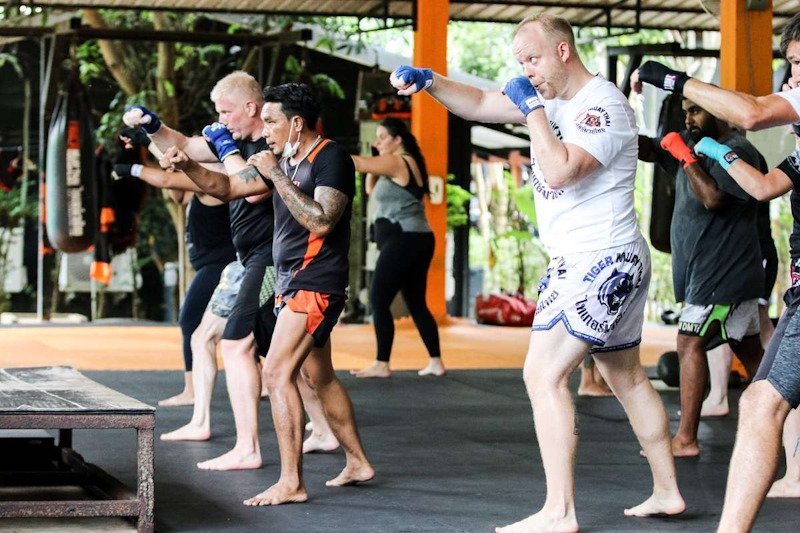
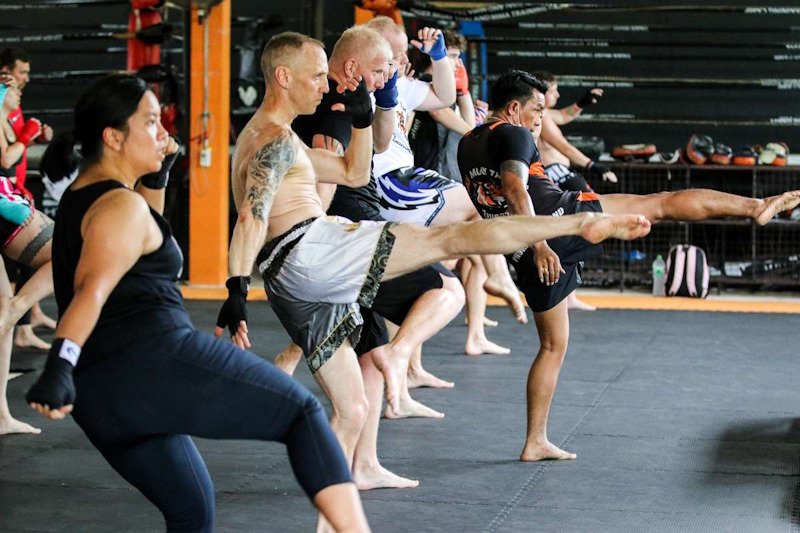
International community: On any given day, you will train alongside people from the UK, Australia, Brazil, Japan, the US, and everywhere in between. The energy is unlike anything you will find at a local gym back home.
Proven fighter pipeline: Tiger has produced and trained fighters who have competed and won at the highest levels, including in ONE Championship and international Muay Thai circuits.
All-in-one infrastructure: You can eat, sleep, train, recover, and repeat without ever leaving the property. That level of immersion accelerates progress dramatically.
The reputation is not built on marketing. It is built on results, consistency, and decades of delivering real training to real people.
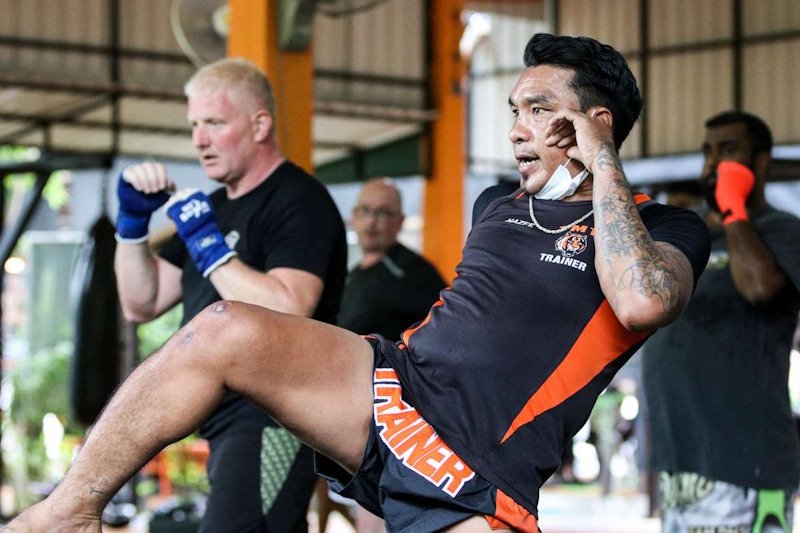
The Classes: What You Will Train and How the Day Breaks Down
Walking into Tiger for the first time and looking at the class schedule can feel overwhelming. There are sessions running morning and afternoon across multiple disciplines, and the temptation is to sign up for everything. They cater to all levels of ability, but be honest about your current abilities, and skill level.
Understanding how the training day is structured helps you plan smarter and avoid burning out in your first week. The general rhythm follows two main windows: morning sessions that typically run from around 7 AM to 9 AM and afternoon sessions from around 4 PM to 6 PM. This schedule is designed to avoid the brutal midday Phuket heat while giving your body time to recover between sessions.
1. Muay Thai Group Classes: This is the cornerstone of what Tiger does. Classes are broken into beginner, intermediate, and advanced levels. A typical session includes a warm-up run, shadow boxing, pad work with trainers, bag rounds, clinch work, and a cool-down. The pad work with your assigned Thai trainer is where the real magic happens. You will get personalized feedback, correction, and encouragement in every round. Don’t worry if you are a beginner as they work with complete beginners all the time.
2. Mixed Martial Arts Classes: Tiger has a serious MMA program that covers striking, takedowns, ground and pound, and positional grappling. These classes attract fighters who are actively competing or preparing for bouts, and former fighters staying in shape.
3. BJJ and Grappling: The Brazilian Jiu-Jitsu program at Tiger runs under qualified black belt instructors. Whether you are a white belt just learning to survive or a more experienced practitioner, there are mat sessions available throughout the week. Don’t worry about your current martial arts ability.
4. Strength and Conditioning: Functional fitness instruction classes run regularly by tiger’s fitness trainers and are designed to complement the combat sports training. These are brutal in the best possible way.
5. Private Sessions: For an additional fee, you can book private session time with a trainer of your choice. This is highly recommended if you are training for a fight or want to accelerate progress on specific techniques.
Most guests train two sessions per day. Three is possible if your body can handle it, but two done well will transform you faster than three done in survival mode.
Beginner or Advanced: How to Know Where You Fit
One of the most common questions first-timers ask is whether they are fit enough or experienced enough to train at Tiger. The honest answer is that it does not matter.
Tiger Muay Thai is genuinely one of the most beginner-friendly serious training camps in the world. The beginner classes are taught with patience and attention to foundational technique. You will not be thrown into sparring on day one. You will not be expected to keep up with someone who has been training for five years. The structure is built to meet you where you are. But be realistic about your current level of fitness.
If you are a complete beginner, here is what to know:
Start with just one session per day for the first three to four days. Your body will be doing things it has never done, and the soreness will surprise you. Let the movement patterns settle before adding volume.
If you have some experience, here is what to know:
Be honest about your level when you arrive. Underestimating yourself and training below your level wastes time. Overestimating yourself and jumping into advanced classes before you are ready leads to injury. The staff are good at assessing where you belong if you let them.
If you are an experienced competitor, here is what to know:
Tiger has the infrastructure to prepare you for a real fight. The fighter program includes structured sparring, fight-specific conditioning, and access to coaches who understand what it takes to perform on fight night. Reach out ahead of your trip and communicate your goals so the team can set you up with the right program.
The level does not matter. The willingness to show up and do the work does.
How Much It Costs to Train at Tiger Muay Thai
Budget is always part of the conversation, and Tiger Muay Thai is more affordable than most people assume given the caliber of training on offer.
Pricing is broken into daily, weekly, and monthly packages. Monthly packages offer the best value per session and are what most people who are staying for two weeks or more end up going with. Prices do shift periodically, so always check the official Tiger Muay Thai website for current rates, but here is a general framework to work with.
Daily drop-in: Roughly 700 to 900 Thai Baht per session. Good for testing the waters before committing.
Weekly package: Typically covers unlimited classes across a seven-day period and comes in at a noticeably lower per-session cost than daily drop-in.
Monthly package: The sweet spot for serious training. Monthly unlimited packages represent the best cost-per-session value and are popular among people staying for a month-long training trip.
Private sessions: These are priced separately and typically run between 1,000 and 1,500 Baht per session depending on the trainer and discipline.
Gear: Budget for hand wraps, gloves, Muay Thai shorts, and shin guards if you do not have your own. Tiger has a shop on site and there are vendors throughout Chalong and Kata that sell gear at reasonable prices.
When you factor in the exchange rate for most Western visitors, training at Tiger Muay Thai for a full month often costs less than a single month’s membership at a decent gym back home. The value is genuinely exceptional.
Where to Stay: On-Site vs. Off-Site Accommodation
Accommodation is one of the biggest decisions you will make around your Tiger Muay Thai trip, and the right choice depends on your priorities.
Tiger has on-site accommodation that ranges from basic rooms to more comfortable private options. Staying on-site means you roll out of bed and walk directly to the gym. There is zero commute time, no scooter navigation, and you are fully immersed in the training camp atmosphere around the clock.
On-site pros: Maximum immersion, zero logistics, easy access to the gym restaurant and recovery facilities, and a built-in social environment with other athletes.
On-site cons: Less privacy, you are always in the training bubble which can feel intense for longer stays, and the noise and early morning activity can be disruptive if you are a light sleeper.
Off-site pros: More space, more privacy, easier access to local life in Phuket, and often more value for money especially if you are traveling with a partner or in a group.
Off-site cons: You need a scooter or reliable transport to get to and from the gym twice a day. In Phuket traffic, this adds time and energy to every training day.
The majority of long-stay visitors rent a room or small apartment in the Chalong neighborhood and rent a scooter for the duration of their trip. It is the most popular setup for good reason. The Chalong area is safe, affordable, full of training camp energy, and puts you within a few minutes of the gym at all times.
Food, Recovery, and Life Between Sessions
What you do between training sessions matters as much as the training itself, and Phuket makes it very easy to fuel and recover well.
Tiger has an on-site restaurant that serves Thai food, Western options, protein-heavy meals, and fresh juices. The food is solid, convenient, and priced fairly. Many athletes eat at least one meal there per day, especially post-training when the last thing you want to do is ride a scooter in search of food.
For recovery, Phuket is practically purpose-built for athletes:
Thai massage: This is not a luxury spa massage. Thai sports massage is deep, aggressive, and effective at working out the kind of muscle soreness that training camp creates. Budget for at least two or three sessions per week. Prices in Chalong range from 300 to 500 Baht per hour, making it one of the most affordable recovery tools you will ever have access to.
The pool: Tiger’s on-site swimming pool is a legitimate recovery asset. Cold water immersion and active recovery swimming between sessions helps flush soreness and keep you moving.
Sleep: This one is obvious but worth saying. Your body repairs during sleep, and training two sessions a day demands at least eight hours. Treat your sleep schedule like a training variable.
Local food: Street food and local Thai restaurants in the Chalong area are cheap, fresh, and genuinely nutritious. Pad kra pao, khao man gai, and fresh papaya salad are staples that keep athletes fueled without draining their budget.
The athletes who get the most out of Tiger are the ones who treat food, sleep, and recovery as seriously as they treat their pad work. You cannot train hard twice a day on poor sleep and beer, no matter how motivated you feel on day one.
The Culture Inside Tiger Muay Thai: What the Atmosphere Is Actually Like
No travel guide or review fully prepares you for the feeling of walking through the Tiger Muay Thai gates for the first time.
The atmosphere is electric. There is a constant rhythm of punching, kicking, and coaching that hits you immediately. Trainers call out technique corrections with a combination of Thai and English. Fighters wrap their hands and tape their shins with practiced efficiency. Music pumps through the training area. And within the first session, the nervous energy you arrived with transforms into something that feels more like focus.
What people do not always expect is how welcoming the community is.
Training at Tiger creates an instant social bond. You are all there for the same reason. You are all sweating through the same sessions, struggling with the same techniques, and pushing through the same soreness. Conversations happen naturally. Training partners become friends quickly. Many visitors describe Tiger as one of the most socially rich experiences they have had as an adult traveler.
The Thai trainers carry the culture of the gym. They are firm but encouraging, technically precise but patient with beginners, and deeply passionate about the sport they have dedicated their lives to. Showing respect, arriving on time, working hard, and being humble goes a very long way in earning their attention and investment in your development.
Tiger is a serious training environment that also happens to be one of the most fun places on earth to spend a month.
How to Get the Most Out of Your Time at Tiger Muay Thai
Most people who visit Tiger Muay Thai leave thinking one thing: they wish they had stayed longer. Here is how to make sure you squeeze every drop of value out of your trip.
1. Arrive with a clear goal. Do you want to lose weight, learn the basics, prepare for a fight, or just experience training in Thailand? Your goal shapes everything from which classes you take to how long you should stay.
2. Stay for at least two weeks. One week is better than nothing, but two weeks is where real change starts to happen. Your body adapts, your technique begins to click, and the training rhythm becomes natural rather than exhausting.
3. Book a private session in your first week. One private session early on gives you personalized feedback that will improve every group class you take afterward. It is one of the highest return investments you can make during your stay.
4. Learn basic Thai courtesy. A simple “khob khun krap” (thank you) or “wai” bow at the end of a session with your trainer communicates respect in a language that transcends language barriers. It matters more than most visitors realize.
5. Train consistently over training maximally. The biggest mistake first-timers make is going too hard in the first few days and spending the rest of the week injured. Sustainable effort over the full duration of your stay beats heroic effort in the first three days.
6. Explore Phuket. Tiger Muay Thai is the star of the trip, but Phuket has waterfalls, temples, islands, and night markets that are worth experiencing. Your rest days are not wasted time. They are part of the full experience.
Tiger Muay Thai rewards those who approach it with intention. Show up prepared, train with discipline, recover with purpose, and you will leave a version of yourself that the person who booked the flight would barely recognize. You will likely leave in the best shape of your life.
Tiger Muay Thai is not just a gym you visit. It is an experience that gets under your skin in the best possible way. The training is real, the community is genuine, and the impact on your fitness, your confidence, and your perspective on what you are capable of is something you carry home long after the tan fades and the soreness disappears.
If you have been sitting on the fence about making this trip, consider this your sign. Book the flight, pack your gear, and get to Phuket. The pads are waiting.
Tiger Muay Thai vs. Sinbi Muay Thai
Guides:
Phuket Planning Guide
How to get around Phuket
Phuket Airport Shuttles & Transfers