

Atmanjai Detox & Wellness Center, Phuket: A Complete Guide to Every Program
Atmanjai Detox is the Phuket detox center people recommend when they want to be honest about price. It does not have the manicured hush of the island’s luxury wellness resorts, and it is not trying to. What it has instead is a beachfront position on the quiet southern end of the island, four clearly differentiated programs that run from genuinely gentle to genuinely severe, and a daily schedule packed with enough included classes and treatments that you would struggle to attend everything. The Atmanjai detox experience emphasizes holistic healing and rejuvenation.
It also has a statistic that stopped me when I heard it: around 70 percent of its guests are repeat customers. For a property whose core product involves fasting and twice-daily colon cleansing, people choosing to come back in those numbers is the most meaningful endorsement available.
Many guests return for the Atmanjai detox programs, drawn by the effective health benefits and supportive community.
I visited on October 16, 2026. What follows is a full breakdown of every program they run, what actually fills a day, the culture of the place, and the parts I would want to know about before paying a deposit — including a few claims on their own materials that I would treat skeptically.
Medical note: Atmanjai’s deeper programs involve full fasting and twice-daily colon cleansing. Those are not neutral interventions. If you take medication for blood pressure, diabetes, blood thinning, or anything else, talk to your own doctor before booking a fast.
The short version
| Field | Detail |
|---|---|
| Location | Friendship Beach, Soi Mittrapap, Wiset Road, Rawai, Phuket 83130 |
| Setting | Beachfront on Chalong Bay, southern Phuket — quiet, non-touristy |
| Programs | Eat Well, Juice Cleanse, Ultra Cleanse, Health Reset, Atmanjai detox |
| Minimum stay | 3 days on all programs; 7+ unlocks most treatments |
| Price | From ฿4,650 per day, all-inclusive (roughly $130-140) |
| Philosophy | Based on Dr. Bernard Jensen’s natural cleansing protocols |
| Terrain | Flat and compact — easy walking, suitable for limited mobility |
| Repeat guests | Around 70% of guests are returning customers |
| Colema facilities | Private colema room per guest for the full stay — never shared |
| Hosted retreats | Several styles, run in low season — roughly March to October |
| Group retreats | Will build a custom retreat for a private group; enquiries welcome |
| Best for | Value-focused detoxers, repeat fasters, people who want structure over polish |
| Less good for | Luxury seekers, anyone wanting a resort holiday, nightlife proximity |
The setting: Friendship Beach, Rawai
Atmanjai sits on Friendship Beach in Rawai, at the southern tip of Phuket facing Chalong Bay. They describe themselves as Phuket’s only beachfront wellbeing center, and as far as I can tell that is accurate — the island’s other detox centers are inland or hillside. The practical effect is that your morning yoga happens with the water about thirty seconds away, and the beach excursions included in every program are a short walk rather than a transfer.
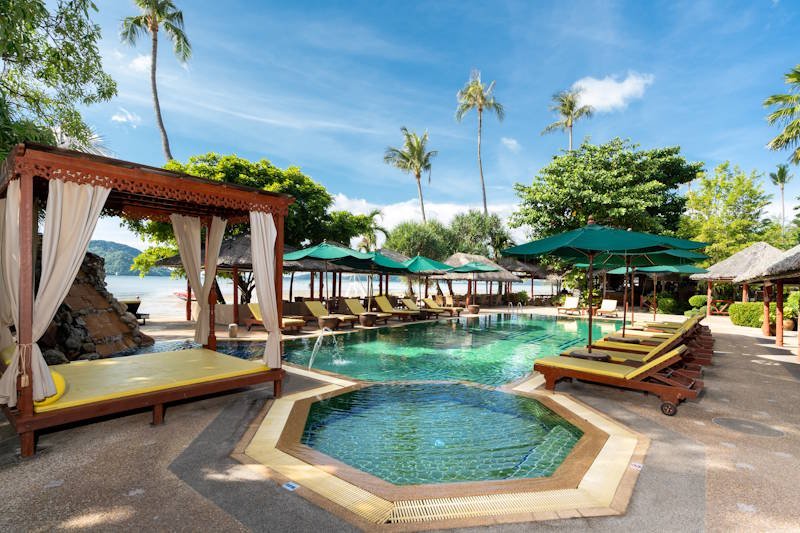

Rawai is the right neighborhood for this. It is residential, slow, full of expat long-stayers and local families, and almost entirely free of the party infrastructure that defines Patong. Chalong Bay itself is not a swimming beach in the postcard sense — it is a working bay with longtail boats and shallow water at low tide — so if you are picturing Kata or Nai Harn sand, adjust. What it offers is quiet, which is the point of a detox.
The site is flat and compact. Everything is within a short, level walk, which makes this one of the easier Phuket wellness properties to navigate if stairs or balance are a consideration.
Accommodation
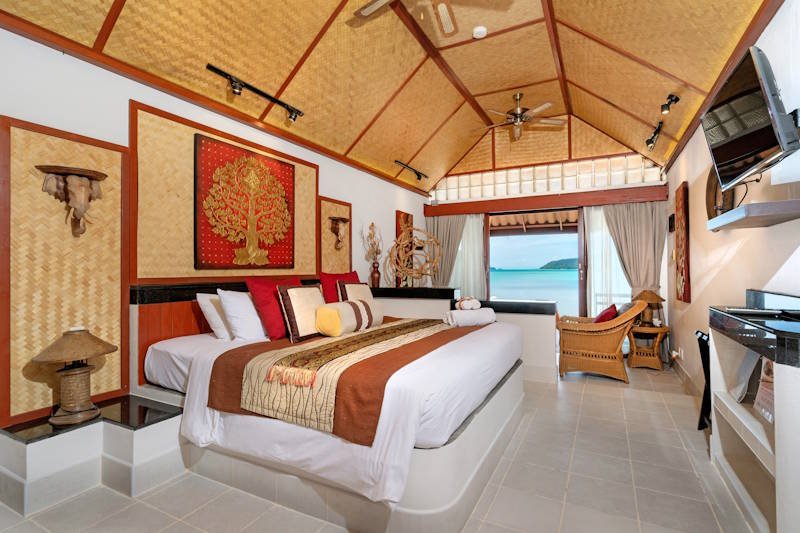
Rooms come in two clusters. The Friendship Beach Resort buildings on site offer deluxe rooms, two-bedroom suites, and — unusually for a wellness center — shared twin rooms at a lower rate, which is a large part of why Atmanjai is accessible to people who could never justify a luxury retreat. Serenity Resort & Residences, about 300 meters away, provides additional rooms and suites including two-bedroom grand seaview options.
Be clear-eyed about what you are booking. This is comfortable mid-range accommodation attached to a serious program, not a design hotel. The program is the product; the room is where you sleep between sessions.
The philosophy
Atmanjai builds its protocols on the work of Dr. Bernard Jensen, a mid-twentieth-century American figure in naturopathy and iridology whose central claim was that accumulated intestinal waste drives most chronic illness, and that deep cleansing of the colon reverses it. That framework shapes everything here: the fasting structure, the twice-daily colon work, the psyllium and bentonite shakes, the iridology session on longer stays.
People routinely leave these programs feeling markedly better, and there are unremarkable reasons why. For a week you eat no processed food, drink no alcohol, consume far fewer calories, sleep on a schedule, move every day, get a daily massage, and sit in silence with other people doing the same.
The four programs, explained properly
This is where Atmanjai does something genuinely useful. Most detox centers offer one protocol with a dial on it. Atmanjai runs four distinct programs with real differences in food, intensity and target guest, and they are honest about who each one is for. All four start from ฿4,650 per day, all-inclusive, with a three-day minimum.
| Program | Intensity | Diet | Who it is for |
|---|---|---|---|
| Eat Well | Light | Plant-based meals | Beginners, over-70s, anyone who does not want to fast |
| Health Reset | Light | Plant and protein meals | Guests 40+ wanting gentle fitness and yoga, not a cleanse |
| Juice Cleanse | Medium | Fresh juices only | Those with some fasting experience, weight-loss focus |
| Ultra Cleanse | Ultra | Broth, full fast | Experienced detoxers only |
1. The Eat Well Detox Program — the one I recommend first
This is the program most first-timers should book, and the one Atmanjai deserves credit for offering. You eat. Three plant-based meals a day, prepared on site, alongside a mild cleansing protocol — the psyllium and bentonite shakes, apple cider vinegar teas, wheatgrass and alfalfa shots, cleansing herbs, vitamins, minerals and probiotics. One colema per day rather than two.
Atmanjai explicitly positions this as suitable for beginners, for guests over 70, and as a gentle entry point for people managing chronic conditions. That is an unusually responsible piece of program design in a market where everything is sold as transformational. You get the full schedule of classes, the daily massage, the steam and ice baths, the blood pressure monitoring and the exit interview — the entire structure of the experience — without the physiological stress of a fast.
Diet Plant-based meals daily, plus fresh coconut, unlimited water and herbal tea
Colema One per day
Honest take If you have never fasted, start here. The marginal benefit of a deep fast over this program is much smaller than the marginal risk, and you will actually enjoy it.
2. The Health Reset Program — a fitness holiday, not a detox
Health Reset is the odd one out, and the most overlooked. It is not a cleanse at all. It is a structured, deliberately low-impact fitness and yoga holiday aimed specifically at guests aged 40 and over, with plant and protein-based meals rather than a restricted diet. Atmanjai describes it as gentle, low-impact movement with no extreme workouts and no rigid eating rules.
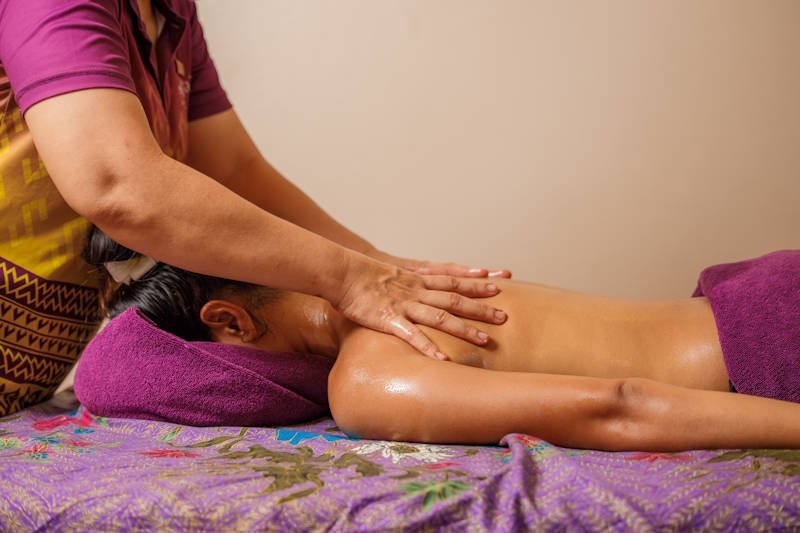
The daily structure is the strongest part: morning yoga and tea ceremony, a daily fitness class, a second yoga session in the afternoon, meditation and breathing work, wellness lectures, raw food recipe sharing, plus rebounder and inversion table sessions. You get the daily massage, herbal steam and ice bath as on every program, with foot reflexology and magnesium baths on stays of ten days or more and an office syndrome treatment from six days. They throw in an Atmanjai cap and kit bag.
Best for Anyone over 40 who wants to move, eat properly and reset habits without fasting or colon work
Honest take This is the most underrated program on the island for its price. Two yoga sessions and a fitness class daily, with food and a massage, for mid-range money.
3. The Juice Cleanse Detox Program — the middle path
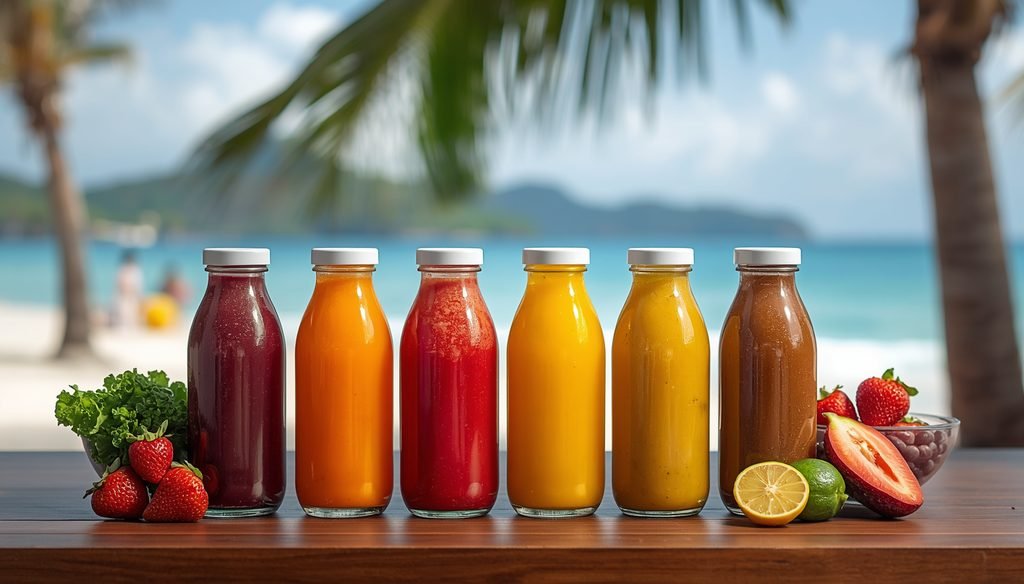
The juice cleanse is the classic Phuket detox experience and Atmanjai’s most popular program. You drink fresh fruit and vegetable juices — green juices feature heavily — with no solid food. Activity drops to light by design, and the colema schedule doubles to two sessions daily.
The supplement and support protocol is the same comprehensive list as the other programs: psyllium and bentonite, apple cider vinegar tea, alfalfa shots, wheatgrass and flaxseed, cleansing herbs, full vitamin and mineral supplementation, probiotics during the stay plus a take-home probiotic course. Daily massage, herbal steam bath, ice bath, fresh coconut and a blood pressure reading. Morning yoga and tea ceremony.
Expect days two and three to be the difficult ones — headache, irritability, low energy — and expect that to lift. This is why the three-day minimum is really a misleading number: a three-day juice cleanse is mostly the unpleasant part. Seven days is where people describe the shift.
Diet Fresh fruit and vegetable juices, no solids
Colema Two per day
Honest take The right choice if you have fasted before and want a proper reset. Not the right first experience.
4. The Ultra Cleanse Detox Program — experienced only, and they mean it
The flagship, and the one to approach carefully. Ultra Cleanse is a full fast on vegetable broth, with limited activity, two daily colemas, and the full supplement and treatment protocol layered on top. Atmanjai categorizes it for experts and actively directs beginners toward Eat Well or Health Reset instead — which, again, is more responsible than most of this industry manages.
A full broth fast over seven or more days is a significant physiological event. It is also the version of this experience that long-time fasters come back for, and the staff monitoring is real — daily blood pressure readings, program assessments, a personal review and an exit interview are all built in.
Diet Vegetable broth, full fast
Colema Two per day
The colema: what it actually is, since nobody explains it
This is the part people have questions about and will not ask, so here it is plainly. Atmanjai uses the colema method rather than colonic hydrotherapy, and the difference matters.
A colonic is administered by a therapist using a pressurized machine, usually in a clinical treatment room. A colema is self-administered: you lie on a board over a toilet, with a gravity-fed bucket of water, and manage the process yourself in private. Atmanjai provides the board, the tip, the lubricant and a handbook explaining it, plus loofah scrubbing as part of the routine.
People react to this in one of two ways, and both are reasonable. Some find the idea of doing it themselves more confronting than having a professional handle it. Others — a larger group, in my experience — strongly prefer the privacy, and find the absence of a stranger in the room makes the whole thing easier. It is also a significant part of why Atmanjai costs what it does rather than twice that: self-administered sessions do not consume therapist hours.
Every guest gets their own private colema room for the whole stay
This is the detail that should settle the question for most people, and I had to visit to learn it, because it is not promoted anywhere. At Atmanjai, each guest is assigned a private colema room for the full duration of their stay. It is yours. You are not sharing it, not booking a slot in it, and not waiting for someone else to finish in it.
Understand what that removes. The three real objections to self-administered cleansing are hygiene, scheduling and dignity — using a facility someone else just used, having to fit your sessions into a rota, and the general indignity of queuing for something this personal. A dedicated room eliminates all three at once. You go when your body says to go, which on a fasting program is not always a time you can predict, and you walk into a space that is only ever yours.
It is also a quietly expensive thing for a property to offer. A private room per guest for an entire stay means real estate sitting idle most of the day, which is precisely why most centers run shared facilities on a booking schedule instead. For a center positioned at Atmanjai’s price point to allocate space this way is a genuine structural choice, not a marketing line — and it is one of the clearest reasons the twice-daily protocol is tolerable here over seven or ten days when it would grind elsewhere.
If you have read about colemas and recoiled, this is the thing to know. The objection you are having is mostly about shared facilities, and that is not what happens here.
The practical details
A session takes forty-five minutes to an hour. You do it twice a day on the Juice Cleanse and Ultra Cleanse, once a day on Eat Well, and not at all on Health Reset. It is not painful. The first time is the awkward one and the handbook plus staff guidance covers it. If colon work is an absolute dealbreaker for you regardless of the privacy arrangements, Health Reset is the program without it.
The classes: what actually fills a day
Atmanjai’s real value is the sheer density of included programming. At most Phuket wellness properties, each of the following would be an add-on with a price next to it. Here they are in the daily schedule at no extra charge, and you could not attend everything if you tried.
Movement
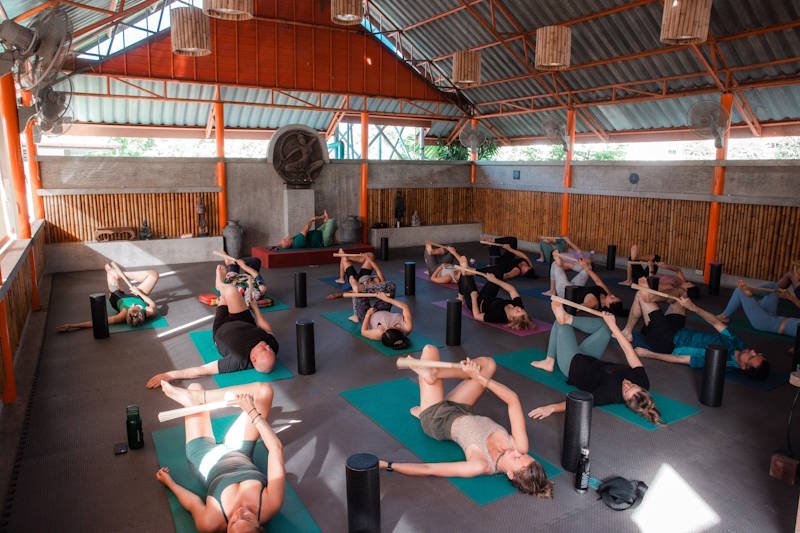
- Morning yoga, paired with a tea ceremony — the anchor of every program
- Afternoon yoga, on Health Reset
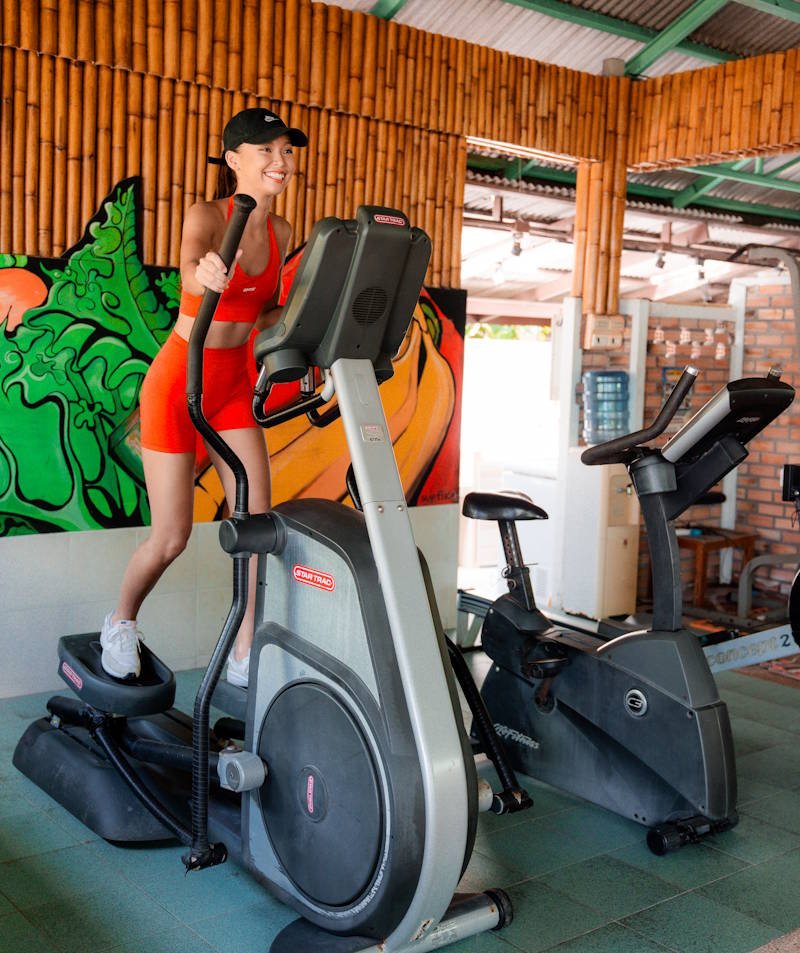
- Daily fitness class, on Health Reset — gentle and low-impact by design
- Rebounder sessions — mini-trampoline work, easy on the joints
- Inversion table sessions
- Beach excursions, included on every program
Mind and breath
- Meditation and breathing class
- Sound healing
- Reiki healing
Learning
- Wellness lectures — the educational backbone, and the part that determines whether anything sticks when you get home
- Raw food recipe sharing — practical, and the most directly useful session for most guests
- Health theatre — film and presentation sessions on health topics
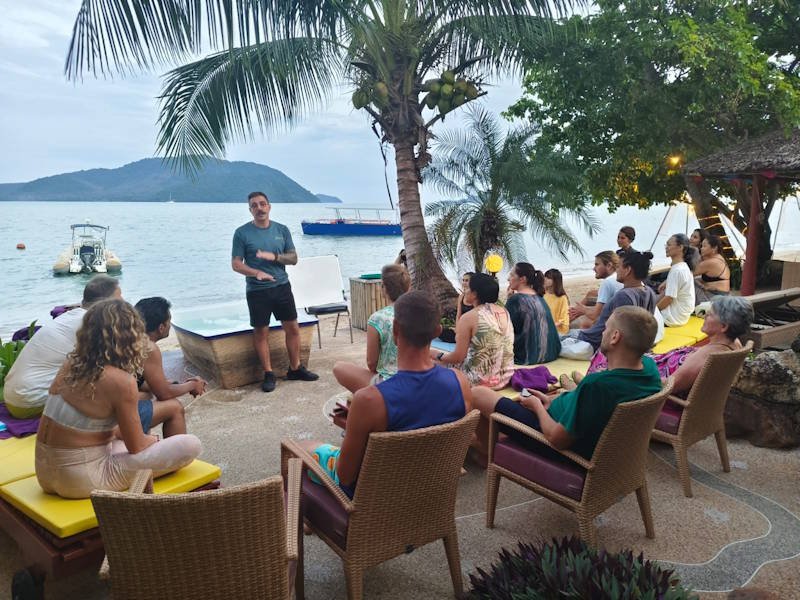
That last cluster is worth taking seriously. The difference between a detox week that resets you for a month and one that resets you for a year is almost entirely whether you learned anything transferable. Atmanjai leans harder on education than most centers at this price, and the recipe sharing in particular is the session guests mention afterward.
Treatments, and how length of stay unlocks them
This is the single most important practical thing to understand before booking, and it is buried on their site. Atmanjai tiers its included treatments by how long you stay. A three-day booking gets you a fraction of what a ten-day booking does, which changes the value calculation considerably.
| Treatment | Minimum stay | Notes |
|---|---|---|
| Daily massage | Any | Every day, every program |
| Herbal steam bath | Any | Daily |
| Ice bath | Any | Daily |
| Blood pressure reading | Any | Daily monitoring |
| Magnesium bath (30 min) | Any | Twice on 10+ day Health Reset |
| Foot reflexology (30 min) | Any | Twice on 10+ day Health Reset |
| Ion cleanse (30 min) | 5+ days | Evidence for this is weak |
| Thai traditional medicine (30 min) | 5+ days | Worth having |
| Office syndrome treatment | 6-7+ days | Neck, shoulder and back work — genuinely useful |
| Infrared sauna / ozone (30 min) | 7+ days | Ozone claims overstated; sauna is pleasant |
| Iridology | 10+ days | No diagnostic validity — treat as curiosity |
Booking implication: Seven days is the threshold where Atmanjai becomes good value, and ten is where you get everything. A three-day booking on a fasting program gives you the hardest days of the cleanse and the fewest treatments. If your schedule allows only three days, book Eat Well or Health Reset instead.
The culture: who goes, and what the place feels like
Atmanjai attracts a distinctly different crowd from Phuket’s luxury wellness resorts, and this is the main thing that will determine whether you love it or leave early.
Here is the number that tells you the most about this place: roughly 70 percent of Atmanjai’s guests are returning customers. I would put more weight on that single statistic than on any review, including this one. Detox is uncomfortable. Fasting is uncomfortable. People do not voluntarily repeat an uncomfortable week at the same property unless the week delivered something — and a seven-in-ten return rate is extraordinary in a hospitality category where most guests are one-time visitors ticking off a bucket-list cleanse.
It also explains the culture, because a majority-repeat guest population behaves completely differently from a majority-new one. The guest mix skews older than the yoga-retreat average and heavily international, and a large share of the people around you have done this before — they know the staff by name, they know which day the headache lifts, and they know what they came to achieve. Nobody is performing wellness for a camera. Conversations in the common areas are frank about what the fasting is actually doing to you, which newcomers find either disarming or reassuring and usually both. If you arrive nervous on day one, you will be surrounded by people who can tell you exactly what day three feels like.
The shared twin rooms also matter culturally. By keeping a lower price tier, Atmanjai draws long-stay expats, teachers, retirees on fixed incomes and solo travelers on real budgets — a wider social range than you find at properties where the entry point is four figures a night. The result is more conversation and less isolation than at a comparable luxury center, where guests retreat to private villas.
The staff culture is the other half of it. This is a Thai-run operation with long-serving therapists, and the register is warm and informal rather than scripted. You are more likely to be gently teased about your mood on day three than handed a scented towel.
What it is not: polished. Expect functional buildings, a working beach, some wear in places, and a level of organization that is competent rather than seamless. If a chipped tile or a class that starts five minutes late will bother you, this is not your retreat, and Trisara or Amatara will serve you better for considerably more money.
Hosted retreats and custom group retreats
This is the part of Atmanjai’s offering that almost nobody writing about the place mentions, and it is arguably the most interesting thing they do.
The hosted retreat season runs March to October
Alongside the four individual programs, Atmanjai runs hosted retreats in several different styles during Phuket’s low season — roughly March through October. This is the inverse of how most people plan a Phuket trip, and it is worth understanding why it makes sense rather than treating it as a compromise.
Low season means fewer guests on site, more staff attention per person, lower rates, and a property that feels like a retreat rather than a hotel at capacity. The weather trade-off is real — expect rain, usually in heavy afternoon bursts rather than all-day drizzle — but if your week is built around yoga, treatments, lectures and fasting, you are indoors or under cover for most of it anyway. The thing high season buys you is beach weather, and beach weather is the part of Phuket a detox week uses least.
The practical consequence: if you want a hosted retreat rather than an individual program, you need to plan around March to October. Ask for the current retreat calendar when you enquire, because the styles on offer rotate.
They will build a retreat around your group
Atmanjai is open to designing a retreat for a private group, and they actively welcome enquiries. This is a genuinely useful option that very few Phuket properties at this price point will entertain.
It opens the door for a particular set of people:
- Yoga teachers who want to run their own retreat without building the infrastructure — the kitchen, the treatment staff, the accommodation and the schedule already exist
- Wellness coaches and nutritionists bringing a client cohort through a structured reset
- Corporate groups wanting a burnout-recovery or team wellness week with substance rather than a hotel conference room
- Friend groups, families or milestone birthdays where everyone wants a different intensity — one person fasting, another on Health Reset, another just eating well
- Running clubs, martial arts gyms and sports teams wanting a conditioning and recovery block
That last point about mixed intensity is the strongest argument for Atmanjai specifically. Because they run four distinct programs off the same daily schedule, a group can share the yoga, the lectures, the massages and the social side while each person sits at a different level of dietary intensity. At a center with a single protocol, the member of your group who cannot or will not fast simply does not come.
If you are organizing a group: Ask about the retreat calendar for your target months, minimum group size, whether you can bring your own teacher or facilitator, how program intensities can be mixed across the group, what the exclusive-use options look like, and what the rate structure is. Enquire early — the low-season window is where these run, and the styles rotate. Email: bookings@atmanjai.com
The food, for the programs where you eat
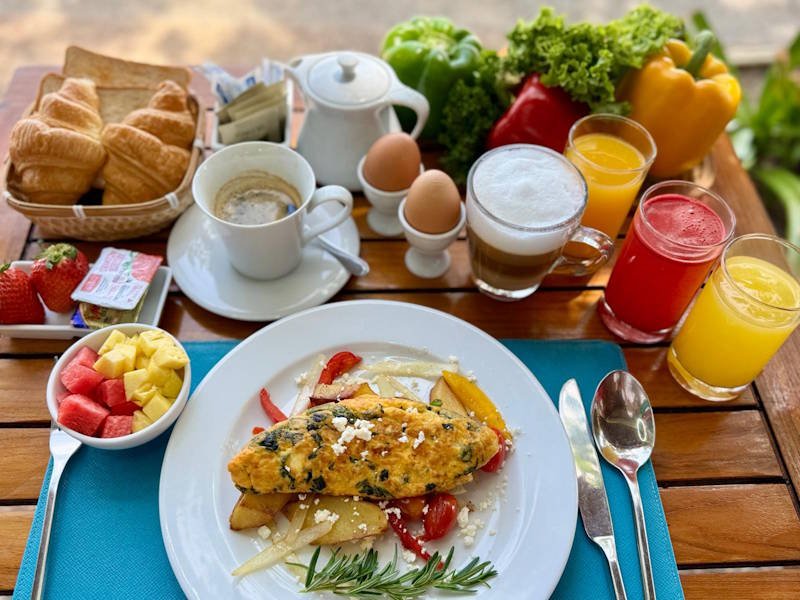
On Eat Well and Health Reset, the kitchen is a real part of the value. The menu blends Thai and Western dishes with full vegetarian, vegan and raw options, and avoids artificial colors, flavors and MSG. Health Reset includes protein alongside the plant-based base, with a fitness-oriented menu. Both programs include daily fresh coconut and a daily juice, and unlimited herbal tea and water run across all four programs.
The raw food recipe sharing session connects directly to this, and it is the part most likely to change what you cook at home. If you are on an eating program, go to it.
Practical planning
Getting there
Rawai is at the far southern end of Phuket, roughly an hour to an hour and fifteen minutes from Phuket International Airport depending on traffic. Book a transfer in advance rather than negotiating at arrivals. Once you are at Atmanjai you will barely need transport, but Grab and Bolt both operate in Rawai, and Nai Harn beach, the Promthep Cape viewpoint and the Rawai seafood market are all a short ride away for the days you want to leave.
Do not rent a scooter. Phuket traffic genuinely injures visitors every week, and you will be fasting.
When to go
Atmanjai’s individual programs run year-round, but their hosted retreats run in Phuket’s low season, roughly March through October. If a group retreat is what you are after, that window is not a suggestion — it is the schedule.
For the standard programs, high season runs December through March: best weather, highest rates, busiest. The shoulder months of November and April are warm, drier than the monsoon, and quieter. The rainy season from May to October is cheapest and, counterintuitively, a good time to fast, since you are not fighting the urge to be on a beach all day and the heat is less punishing. Atmanjai advertises a 20 percent discount on programs and accommodation — worth asking what applies to your dates.
How long
- 3 days: minimum booking. Enough for Eat Well or Health Reset. Not enough for a fast.
- 7 days: the sensible target. Most treatments unlock, and a fast has time to turn the corner.
- 10+ days: everything unlocks, including iridology, and repeat guests tend to book in this range.
What to bring
- More medication than the trip needs, in original labeled packaging, with a typed list of generic names and doses
- Loose, light clothing — you will be in it all day
- A book and no work. The fasting programs leave you with limited mental energy and a lot of unstructured time.
- Electrolytes, if you tolerate them, for the heat
- Realistic expectations about days two and three
Questions to ask before you book
- Which treatments are included at my specific length of stay?
- Can I switch to a lighter program mid-stay if the fast is not working for me, and what does that cost?
- Which accommodation tier am I booked into, and is it on site or at Serenity?
- What discount applies to my dates?
Booking
Email Atmanjai at bookings@atmanjai.com and mention code PHUKETSERENITY for a 5% discount.
How Atmanjai compares to the alternatives
| Center | Position | Choose it over Atmanjai if… |
|---|---|---|
| Amity Wellness | Mid, boutique | You want a smaller, more hand-held experience with closer daily attention |
| TheLifeCo Phuket | Upper-mid, clinical | You want an on-site clinic, medical programs and chronic disease support |
| Mangosteen Ayurveda | Mid, gentle | You want Ayurvedic treatment and no fasting or colon work at all |
| Chivitr | Upper-mid | You want a quieter, more design-led property inland |
| BDMS Wellness Clinic | Clinical | You want diagnostics and preventive medicine rather than a cleanse |
Atmanjai’s case against all of them is the same: nowhere else on the island gives you this much included programming, this many daily treatments, and a beachfront position at this price. If value per day is your primary filter, it wins. If polish is, it does not.
Frequently asked questions
Which Atmanjai program should I book first?
Eat Well if you want the cleansing protocol while still eating, or Health Reset if you want movement and food with no colon work at all. Both give you the full schedule of classes and treatments. Save the Juice Cleanse and Ultra Cleanse for a second visit once you know how your body handles the structure.
Is three days long enough?
For Eat Well or Health Reset, yes — you will get real benefit. For either fasting program, no. Three days of a juice or broth fast is almost entirely the difficult phase, and you unlock only a fraction of the included treatments. Seven days is the number to aim for.
What is the difference between a colema and a colonic?
A colonic is administered by a therapist with a pressurized machine. A colema is self-administered, gravity-fed, and done privately on a board over a toilet. Atmanjai uses colemas, and every guest gets a private colema room for the entire duration of their stay rather than sharing a facility or booking a time slot. Most guests end up preferring the arrangement, and the self-administered model is part of why the program costs less than centers using therapist-led colonics.
Do I have to share the colema facilities with other guests?
No. Each guest at Atmanjai is assigned their own private colema room for the full length of their stay. You are not booking a slot, waiting for anyone, or using a space someone else just used. This is unusual — most centers run shared facilities on a schedule — and it is the single thing that makes the twice-daily protocol workable over a seven or ten day stay.
Can I do Atmanjai if I am over 70?
Yes, and they say so explicitly for the Eat Well program. The site is flat and compact, which makes it one of the easier Phuket wellness properties to get around. I would not do a full broth fast at that age without a conversation with your own doctor first.
Is it suitable for diabetics?
Atmanjai lists its fasting programs as suitable for diabetics. I would treat that with caution regardless of what the website says. Extended fasting changes how diabetes medication behaves and carries genuine hypoglycemia risk. Get clearance from the doctor who manages your diabetes, and ask Atmanjai specifically what monitoring they provide.
Will I actually lose weight?
On a juice or broth fast over a week, yes, and a substantial portion of it is water and glycogen that returns. The durable change comes from what you learn in the lectures and recipe sessions and carry home. Judge the week by that, not by the scale on checkout day.
Is Atmanjai actually any good, or is it just cheap?
The strongest answer is the return rate: around 70 percent of Atmanjai’s guests are repeat customers. People do not voluntarily book a second fasting week at the same property out of habit. Low price and high repeat business together is an unusual combination, and it suggests the programming is doing real work rather than the price simply attracting one-time bargain hunters.
When do Atmanjai’s hosted retreats run?
The hosted retreats run during Phuket’s low season, roughly March through October, in several different styles that rotate. The four individual programs are available year-round. If you specifically want a hosted retreat rather than booking a program on your own, plan for that March-to-October window and ask for the current calendar.
Can I organize a retreat for my own group?
Yes — Atmanjai is open to building a custom retreat around a private group and welcomes enquiries. This suits yoga teachers who want to run a retreat without creating the infrastructure, wellness coaches bringing a client cohort, corporate burnout-recovery weeks, and friend or family groups. The advantage over most centers is that because Atmanjai runs four programs off one shared schedule, group members can sit at different dietary intensities while still doing the yoga, lectures and social side together.
Is Atmanjai good for a couple where only one of us wants to detox?
Partially. The two-bedroom suites and the nearby beach, seafood market and viewpoints give a non-participating partner something to do, and Health Reset is an easy program for them to join instead. But this is a detox center, not a resort — if your partner wants a holiday rather than a quiet week in Rawai, a resort-based wellness property will suit you both better.
The bottom line
Atmanjai is the best-value serious detox center in Phuket, and the reason is structural: self-administered colemas and mid-range accommodation keep the cost down, while the included programming — two yoga options, fitness classes, meditation, sound healing, Reiki, lectures, recipe sessions, a daily massage, steam, ice bath and a tiered treatment list — matches properties charging several times as much.
And where they have chosen to spend money is telling. Giving every guest a private colema room for their entire stay is an inefficient use of space that no spreadsheet would recommend, and it is exactly the thing that makes a twice-daily protocol bearable for ten days. A center that gets that right, and gets a 70 percent return rate, has worked out what actually matters to the people doing this.
What you give up is polish, and what you have to set aside is a theory of the body that does not hold up. Neither of those stops the week from working — and the 70 percent of guests who come back are the evidence for that, whatever you make of the explanation attached to it.
Book seven days minimum. Start with Eat Well or Health Reset unless you have fasted before. Confirm which treatments your stay unlocks before you pay. And if you are on any medication at all, have the conversation with your doctor before you have it with the retreat.
If you are bringing a group — a yoga class, a team, a family — enquire about a custom retreat in the March to October window. The ability to put everyone on the same schedule at different intensities is something almost nowhere else on the island can offer.
Booking
Email Atmanjai at bookings@atmanjai.com and mention code PHUKETSERENITY for a 5% discount.
Guides:
Phuket Planning Guide
How to get around Phuket
Phuket Airport Shuttles & Transfers
Atmanjai vs. Amity Wellness
Disclosure: Phuket Serenity may earn commission on bookings made through links on this site. I do not own, operate or manage Atmanjai or any property mentioned here, and no property pays for placement or a favorable review. I visited Atmanjai on October 16, 2026. Program inclusions, prices and treatment thresholds change — confirm current details directly with the center before booking.