Phuket vs. Bali Wellness Retreats (2026): The Honest Comparison
This is the question I get asked more than almost any other: should I do my wellness retreat in Phuket or Bali? Both islands are beautiful and show up on every “best wellness destination in Southeast Asia” list. They have devoted followings and genuinely deserve their reputations.
Instead of picking a side to sell you on, I want to walk through where each island actually wins. The honest answer is that neither one is objectively better. They are better for different people, different goals, and different kinds of trips. Each has its own distinct culture.
In the context of phuket vs. bali wellness retreats, each location offers unique advantages.
I live on the island of Phuket and know it intimately. I have also visitied Bali and researched Bali’s wellness scene properly for this comparison rather than relying on secondhand impressions, because a comparison built on home-team bias is not useful to you. Here is what I found.
Phuket vs. Bali Wellness Retreats: Key Differences
The Quick Answer
| If you want… | Choose Phuket | Choose Bali |
|---|---|---|
| Muay Thai or serious fitness training | Yes — clear winner | Limited options |
| Medical wellness and longevity clinics | Yes — clear winner | Very limited |
| A large spiritual yoga community | Smaller scene | Yes — clear winner |
| Vegetarian and vegan food culture | Good, growing | Yes — far more developed |
| Easy direct flights from Australia | Good | Yes — slightly better |
| Budget flexibility at every tier | Good | Yes — wider budget range |
| A quieter, less “scene-y” retreat vibe | Yes | Ubud can feel crowded |
| Detox and cleanse programs | Strong, established | Equally strong |
Full detail on each of these categories follows below.
1. Cost: A Closer Look Than Most Comparisons Bother With
Budget tier
Bali has a genuine edge at the very bottom of the market for budget-friendly accommodations. Ubud eco-lodges and community wellness centers offer stays from as little as $50 a day, and detox programs with daily spa treatments, yoga, and organic juices can run as low as $300 to $600 for four days. Phuket’s budget tier is close but not quite as low — expect $300 to $550 for a comparable week-long program.
Mid-range tier
This is where the two islands are genuinely comparable. A fully packaged mid-range retreat in Bali — accommodation, meals, daily yoga, workshops — typically runs $1,200 to $2,000 per week.
Phuket’s mid-range tier runs $600 to $1,200 for a comparable week, which does give Phuket a real edge here, particularly for detox and Muay Thai-adjacent fitness programs.
Premium and luxury tier
Both islands have excellent premium options, and pricing converges again at the top end. Bali’s luxury wellness resorts — Como Shambhala Estate, Fivelements Retreat — charge premium rates comparable to Phuket’s top properties like Amatara Welleisure and Mangosteen.
Neither island is meaningfully cheaper once you are shopping in the $2,000-plus per week bracket.
| Tier | Phuket (7 days) | Bali (7 days) | Edge |
|---|---|---|---|
| Budget | $300–$550 | $300–$800 | Roughly even, Bali slightly lower floor |
| Mid-range | $600–$1,200 | $1,200–$2,000 | Phuket noticeably cheaper |
| Premium | $1,200–$2,000 | $1,500–$2,500 | Roughly even |
| Luxury | $2,000–$4,000+ | $2,000–$4,500+ | Roughly even |
The honest takeaway: If you are shopping in the middle of the market — which is where most first-time retreat travelers land — Phuket offers noticeably better value. At the very bottom or very top of the market, the two islands are close enough that cost should not be your deciding factor.
2. Retreat Variety: Different Strengths, Not a Clear Winner
Bali’s strength: yoga, spirituality, and community
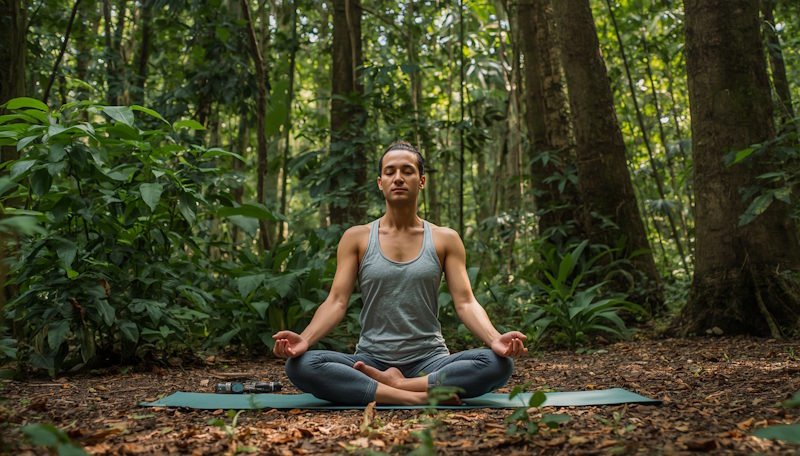
Bali, and Ubud specifically, has a depth of yoga and spiritual retreat culture that Phuket does not attempt to match. The Yoga Barn, Radiantly Alive, and dozens of other established studios have built a genuine international yoga community over two decades. If you want yoga teacher training, silent meditation retreats, sound healing, chakra work, or the kind of retreat that blends physical practice with a wider spiritual framework, Bali’s scene is deeper and more varied. Ubud in particular has an atmosphere — rice terrace views, friendly balinese people, temple culture, a town built around wellness — that Phuket does not replicate.
Phuket’s strength: fitness, medical wellness, and focused programs
Phuket wins decisively in three categories Bali barely touches. Muay Thai training is essentially unavailable in Bali at the level Phuket offers — Phuket has over 50 dedicated camps including world-renowned Tiger Muay Thai and Sinbi Muay Thai, while Bali has none of comparable caliber. Longevity and medical wellness — NAD+ therapy, IV nutrient drips, hormone panels, peptide therapy — is a fast-growing, increasingly sophisticated category in Phuket backed by JCI-accredited hospital infrastructure. Bali’s medical wellness scene, while present, is considerably less developed. And Phuket’s detox and cleanse centers — Atmanjai, Amity Wellness, Phuket Cleanse — are as established and serious as anything in Ubud.

Where they are evenly matched
Both islands do yoga retreats, detox programs, and general spa-based wellness well. If your goal is a standard 7-day yoga and relaxation retreat with no specific specialty requirement, you genuinely cannot go wrong with either island — the choice comes down to atmosphere and logistics rather than program quality.
3. Getting There: A Real Factor for Many Travelers
Flight logistics matter more than most comparison articles admit, particularly for travelers coming from the UK, US, or Europe. These are the easiest way for most travellers.
- From the UK and Europe: both destinations typically require one connection, usually through Singapore, Bangkok, Doha, or Dubai. Total journey time is broadly similar — 14 to 18 hours door to door for either island.
- From Australia: Bali has a slight edge, with more frequent direct flights from Perth, Melbourne, and Sydney, and a shorter flight time overall (around 4 hours from Perth to Denpasar versus 6 to 8 hours to Phuket depending on route).
- From the US: neither island has direct flights. Both require at least one, usually two, connections — typically 20-plus hours of total travel either way.
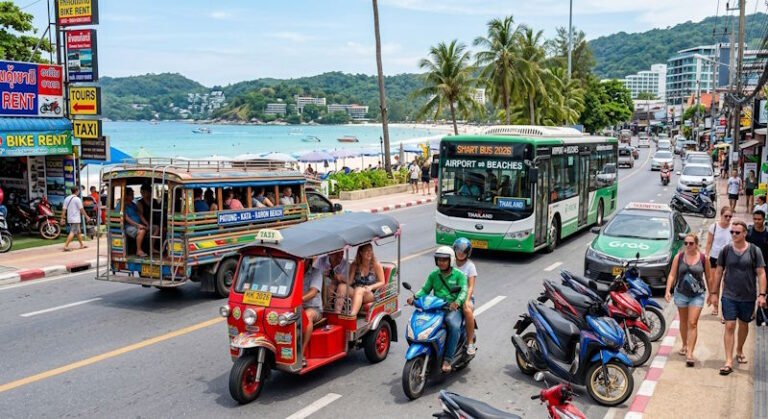
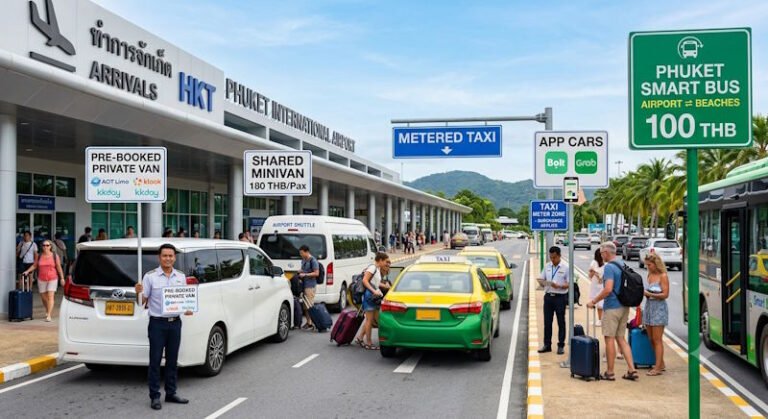
- Domestic transfer: Phuket has its own international airport with direct arrivals. Bali’s Denpasar airport serves the whole island, and getting from the airport to Ubud specifically — the hub of Bali’s wellness scene — can take 60 to 90 minutes through notoriously heavy traffic. Phuket’s retreat areas are generally a more predictable 30 to 45 minutes from the airport.
Practical note: If your retreat is in Ubud specifically, budget extra time and patience for the airport transfer — Bali’s traffic, particularly around Denpasar and Kuta, has gotten considerably worse in recent years and can turn a 90-minute drive into two hours or more during peak times.
4. Food and Diet Culture
This is a genuine point of difference. Bali, and Ubud especially, has one of the most developed plant-based and health-conscious local food cultures anywhere in Asia — the density of local restaurants includes raw food cafes, cold-pressed juice bars, and vegan restaurants in Ubud is remarkable, built up over more than a decade of wellness tourism. If eating well outside of your retreat’s own kitchen matters to you — exploring cafes on free afternoons, trying different healthy restaurants — Bali offers considerably more variety.
Phuket’s healthy thai food scene has grown significantly and is genuinely good within retreat and clinic settings, but the broader restaurant culture outside those settings is less uniformly health-focused than Ubud’s. That said, Rawai and the wellness-cluster areas of the island now have a solid and growing number of healthy cafes and juice bars serving the retreat community specifically. Phuket however is renowned for its street food which is delicious and lower priced than high-end thai cuisine.
5. Crowds, Atmosphere, and “Wellness Fatigue”
Ubud has become, by some accounts, a victim of its own success. The wellness tourism boom of the past decade has brought real crowding to central Ubud — traffic, tourist volume, and a commercialized quality to parts of the yoga scene that some longtime visitors find has diluted the original atmosphere. This does not apply to every retreat — many properties are set outside the busiest areas and retain a genuinely peaceful character — but it is a real and frequently mentioned trade-off.
Phuket’s wellness clusters, particularly Rawai and Nai Harn in the south of the island, have not experienced this same level of saturation. The retreat areas remain relatively quiet and local, without the density of competing wellness businesses that characterizes central Ubud. If a calmer, less commercialized atmosphere matters to you, this is a real point in Phuket’s favor — though it is worth noting Bali offers this too if you look beyond central Ubud to areas like North Bali or quieter parts of Uluwatu.
6. Seasonal Comparison: High Season vs. Low Season on Each Island
Timing affects Phuket and Bali differently, and it is worth understanding both islands’ seasonal rhythms before you pick the best time — the right season and right choice can meaningfully change your budget, the crowds you encounter, and even which activities are realistic.
Phuket: dry season vs. rainy season
Phuket runs on a fairly clean two-season split. Dry season (November to April) brings reliable sunshine, calm seas, and temperatures between 24°C and 32°C — ideal for outdoor yoga sessions, beach recovery time, and Muay Thai training without weather interruptions. December and January are peak dry season: highest prices, busiest retreats, and the need to book two to three months ahead.
Rainy season also known as monsoon season (May to October) brings short, heavy afternoon downpours rather than all-day rain, with mornings typically clear — which matters because most retreat sessions are scheduled in the morning anyway. Retreat prices drop 20 to 40 percent, the island is noticeably quieter, and class sizes shrink at popular centers. September is the wettest month and the one genuine exception — sea conditions on the west coast get rough enough to affect swimming and boat-based activities specifically.
| Phuket season | Months | Weather | Retreat prices |
|---|---|---|---|
| Peak dry season | December–January | Best of the year, 24–29°C | Highest — book 2–3 months ahead |
| Dry season | February–April | Excellent, warming toward April | High but easing |
| Rainy season | May–August | Sunny mornings, afternoon showers | 20–40% lower |
| Wettest month | September | Heaviest rain, rough seas | Lowest of the year |
| Transitional | October–November | Clearing, improving | Low–shoulder |
Bali: dry season vs. rainy season
Bali’s seasonal split follows a similar dry-versus-wet pattern but on a slightly different calendar, and the price swings between seasons are considerably sharper than in Phuket. Dry season (April to October) delivers consistent sunshine and low humidity, with July and August as the extreme peak — hotel rates in these two months spike 40 to 60 percent above baseline, popular areas like Ubud and Canggu see real traffic congestion, and restaurant wait times at peak dinner hours can stretch to an hour.
Rainy season (November to March) brings warm, dramatic afternoon downpours rather than continuous rain, and landscapes turn a deep, vivid green that many visitors find genuinely beautiful. December 20 through January 7 is a strange exception — despite being wet season, Christmas and New Year demand from Australian and European travelers pushes prices up 60 to 80 percent, with beachfront resorts running $300 to $500 a night versus $120 to $180 during the rest of the wet season. January and February are otherwise the cheapest and quietest months of the year, and Bali’s cultural calendar — ceremonies like Galungan and the island-wide silence of Nyepi Day — often falls within this window, adding a cultural dimension dry season visitors miss.
| Bali season | Months | Weather | Retreat prices |
|---|---|---|---|
| Extreme peak | July–August | Perfect but crowded, 27–30°C | 40–60% above baseline |
| Christmas/New Year spike | Dec 20–Jan 7 | Wet season, but high demand | 60–80% above baseline |
| Shoulder dry season | May, June, September | Excellent, fewer crowds | 20–30% below July–August |
| Wet season (main) | November–March | Afternoon downpours, lush | 30–50% below peak |
| Cheapest window | January–February | Humid, rainy, quiet | Lowest of the year |
How the two islands compare seasonally
The most useful takeaway is that Bali’s seasonal price swings are considerably more dramatic than Phuket’s. Phuket’s peak-to-low price difference generally runs 20 to 40 percent; Bali’s swings from 40 to 80 percent at the extremes — which means timing your trip well matters far more for your budget in Bali than it does in Phuket.
The two islands’ calendars also do not perfectly mirror each other. Phuket’s most reliable stretch is November through April; Bali’s is April through October — meaning the two islands are, broadly speaking, in opposite seasons for roughly half the year. If your travel dates are fixed rather than flexible, this is worth checking carefully: a trip booked for August lands in Phuket’s green season (good value, some rain) but Bali’s most expensive and crowded month of the year.
Practical takeaway: If your dates are flexible, February–March is the strongest window for Phuket — excellent weather without peak pricing. For Bali, May, June, or September offer the same balance of good weather and manageable crowds. Avoid Bali in July–August or over Christmas/New Year unless you are prepared to pay a significant premium.
7. Which Island Has the Best Beaches
For a wellness trip specifically, beach quality matters more than it might on a standard vacation — it is where you decompress between sessions, walk in the early morning, and spend free afternoons. The honest answer here is that the two islands offer genuinely different things, and the right pick depends on what you actually want from a beach. So which has the most beautiful beaches?
Phuket’s beaches: consistent, soft, and swimmable
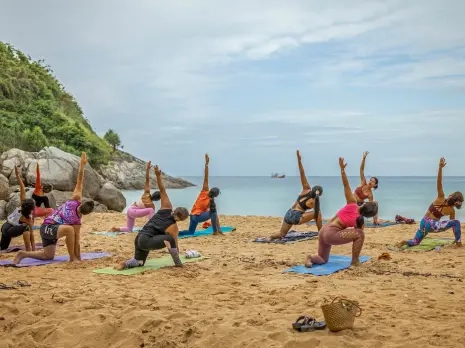
Phuket’s strength is consistency of it’s beach destinations. The island has more than 30 named beaches along its west coast, almost all soft white or golden sand, and the majority are genuinely swimmable — gentle, sheltered, and calm for large parts of the year, particularly in the south. Nai Harn Beach, close to Phuket’s main wellness cluster in Rawai, is routinely rated among the most beautiful on the island: a small horseshoe-shaped cove surrounded by green hills, crystal-clear water in dry season, and a natural, largely undeveloped feel thanks to a nearby temple and royal park that has prevented overbuilding. Karon Beach and Kata Beach offers the best all-around combination of soft sand, gentle swimming conditions, and nearby amenities, while Freedom Beach — reachable only by longtail boat or a jungle trail — delivers a genuinely secluded, postcard-quality experience close to Patong without Patong’s crowds.
For a wellness trip, this matters: after a morning yoga session or a Muay Thai class, a short walk to calm, swimmable water is a real part of the recovery experience, and Phuket delivers this reliably across nearly all of its wellness-adjacent beaches.
Bali’s beaches: dramatic, varied, and surf-focused
Bali’s beaches take a different character entirely. The island offers real diversity — white sand beaches in the south around Nusa Dua and Jimbaran, dramatic limestone cliffs and turquoise water around Uluwatu, and volcanic black sand beaches in the north and around Canggu. What Bali does not offer, in most of its famous spots, is calm swimming water. Uluwatu, Padang Padang, Balangan, and most of the Bukit Peninsula’s most photographed beaches are built around surf breaks — excellent for surfers, considerably less appealing if you simply want to float in calm water after a yoga class.
For calm swimming in Bali, you need to seek out specific beaches — Nusa Dua and Sanur are the reliable choices, both protected by reef and popular precisely because they are the exception to Bali’s generally rougher water. Jimbaran Bay offers a good middle ground: soft sand, gentle waves, and the added bonus of beachfront seafood dinners. None of these calm-water beaches, however, are close to Ubud, which is where the bulk of Bali’s wellness retreat scene is based — meaning a wellness traveler in Ubud is typically 60 to 90 minutes from the nearest genuinely calm beach.
The honest verdict
If having a calm, swimmable, easily accessible beach as part of your daily or weekly rhythm matters to your wellness trip, Phuket wins clearly — the geography simply works better, with multiple excellent swimming beaches close to the main retreat areas. If dramatic scenery, surf culture, and a wider variety of beach character across one trip matters more to you than swimmability, Bali’s cliffs and surf beaches are more visually spectacular and more varied — but be prepared to travel for it, and to choose your specific beach carefully if calm water is what you are after.
| Category | Phuket | Bali |
|---|---|---|
| Swimmable, calm water | Widespread — most west coast beaches | Limited — mainly Nusa Dua, Sanur |
| Sand quality | Consistently soft white/golden sand | Varies — white, black volcanic, and coarse |
| Scenic drama | Good — hills, coves, sunset points | Exceptional — cliffs, dramatic coastline |
| Proximity to wellness retreats | Close — Rawai/Nai Harn area is beach-adjacent | Far — Ubud is 60–90 min from good beaches |
| Best for | Calm swimming, easy access, consistency | Surfing, dramatic views, beach variety |
8. Which Island Suits Which Traveler
| You are… | Consider… |
|---|---|
| Focused on fitness, Muay Thai, or physical training | Phuket — no comparison, Phuket wins clearly |
| Interested in longevity or medical wellness | Phuket — far more developed clinical infrastructure |
| A dedicated or aspiring yoga practitioner wanting deep community | Bali — the yoga culture and teacher training scene is unmatched |
| Interested in sound healing, chakra work, or spiritual retreats | Bali — this is Bali’s specialty |
| Shopping in the mid-range budget tier | Phuket — meaningfully better value at this price point |
| Traveling from Australia and want the shortest flight | Bali — slightly faster and more frequent direct routes |
| Wanting a quieter, less commercialized retreat area | Phuket — particularly Rawai and Nai Harn |
| Someone who loves a strong healthy cafe and restaurant culture | Bali — Ubud’s food scene is more developed |
| New to retreats and want a standard yoga or detox week | Either — genuinely comparable quality at this level |
9. Frequently Asked Questions
Is Phuket or Bali cheaper for a wellness retreat?
At the very bottom and very top of the market, pricing is broadly comparable. In the middle tier — where most first-time retreat travelers shop — Phuket is typically 30 to 40 percent cheaper for a comparable week-long program. Budget travelers may find Bali’s lowest-cost options slightly cheaper than Phuket’s equivalent tier.
Which island has better beaches, Phuket or Bali?
It depends on what you want from a beach. Phuket has more consistently calm, swimmable, soft-sand beaches, many close to the main wellness retreat areas in the south of the island. Bali offers more dramatic and varied scenery — cliffs, surf breaks, and volcanic sand — but calm swimming water is limited to a few specific spots like Nusa Dua and Sanur. Moreover, Bali’s main wellness hub in Ubud is not close to the coast at all.
Which is better for a first wellness retreat, Phuket or Bali?
Both are excellent choices for a first retreat, and the honest answer is that program quality is comparable at the standard yoga or detox retreat level. Choose based on atmosphere preference — Bali for a more spiritually immersive, community-driven experience, Phuket for a quieter setting with easier logistics and, if budget matters, generally better mid-range value.
Does Bali or Phuket have better yoga retreats?
Bali has a deeper and more established yoga culture, particularly in Ubud, with more teacher training options and a wider range of styles and traditions represented. Phuket’s yoga scene is smaller but includes genuinely excellent options, particularly for travelers who want yoga integrated with Ayurveda, detox, or a quieter, boutique setting.
Is Phuket or Bali better for Muay Thai or fitness training?
Phuket, without question. The island has over 50 dedicated Muay Thai camps including world-renowned facilities, while Bali has essentially no equivalent fitness and martial arts training infrastructure at the same level.
Which island has better longevity and medical wellness options?
Ultimately, both islands have unique offerings that cater to different preferences. Whether you prefer the tranquility and wellness-focused atmosphere of Phuket or the vibrant, spiritual energy of Bali, your choice will shape your experience.
Phuket has a considerably more developed longevity and medical wellness scene, supported by JCI-accredited hospital infrastructure and a growing number of dedicated clinics offering NAD+ therapy, IV nutrition, hormone panels, and peptide therapy. Bali’s medical wellness offerings exist but are less extensive and less specialized.
The Final Verdict
If you are choosing based on cost alone, Phuket generally wins in the middle of the market where most people are shopping, though the gap narrows significantly at the budget and luxury ends. If you are choosing based on program specialty, the decision is more clear-cut: Phuket for fitness, Muay Thai, and medical wellness; Bali for yoga depth, spiritual retreats, and food culture.
The Bottom Line, many serious wellness travelers I know do not choose one over the other — they do both, on different trips, for different reasons. If this is your first wellness retreat and you are simply choosing between two rich cultures, you will not make a wrong choice with either island. Pick based on which kind of experience — Bali’s spiritual, community-driven energy or Phuket’s quieter, more focused, better-value approach — sounds more like what you actually need right now.
Guides:
Phuket Planning Guide
How to get around Phuket
Phuket Airport Shuttles & Transfers